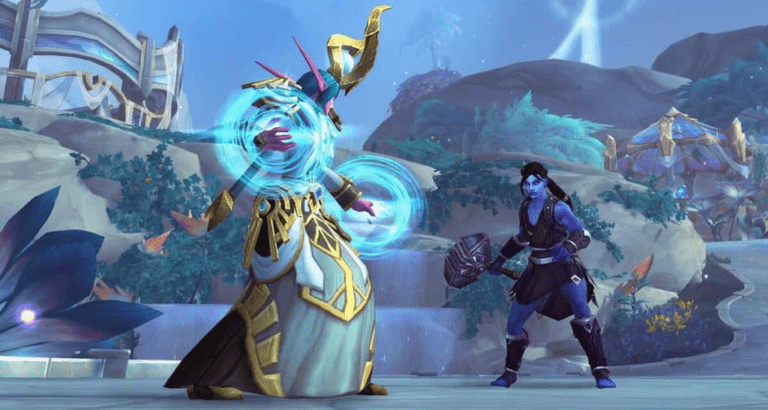
The Metaverse is rapidly evolving into a multifaceted digital universe where users can interact, create, and explore immersive 3D environments. Game builders are at the forefront of this transformation, leveraging cutting-edge technologies to bring these virtual worlds to life. This article delves into the technical aspects of Metaverse game development, exploring the tools, frameworks, and methodologies that are shaping the future of interactive entertainment. We will also examine real-world examples, relevant research, and complex data that highlight the significance of this burgeoning field.
Understanding the Metaverse
The Metaverse is often described as a collective virtual space that merges physical and digital realities. It encompasses a wide range of experiences, from social interactions to gaming, education, and commerce. According to a report by Bloomberg Intelligence, the Metaverse market is projected to reach $800 billion by 2024, driven by advancements in augmented reality (AR), virtual reality (VR), and blockchain technologies (Bloomberg, 2021). This growth presents a unique opportunity for game developers to create engaging and interactive experiences that captivate users.
Key Technologies in Metaverse Game Development
1. Game Engines
Game engines are the backbone of any game development project, providing the necessary tools and frameworks for creating 3D environments. Popular engines like Unity and Unreal Engine have become staples in the industry due to their robust capabilities and extensive support for VR and AR. Unity, for instance, offers a comprehensive suite of tools for building cross-platform experiences, while Unreal Engine is renowned for its photorealistic graphics and advanced physics simulations.
According to a survey conducted by the International Game Developers Association (IGDA) in 2022, 53% of developers reported using Unity, while 27% preferred Unreal Engine (IGDA, 2022). These engines facilitate rapid prototyping and iteration, allowing developers to experiment with different gameplay mechanics and visual styles.
2. 3D Modeling and Animation Tools
Creating immersive 3D worlds requires sophisticated modeling and animation tools. Software such as Blender, Autodesk Maya, and 3ds Max are widely used for designing characters, environments, and animations. Blender, an open-source tool, has gained popularity due to its versatility and active community support. According to a report by Statista, the global 3D animation market is expected to grow from $16.5 billion in 2021 to $29.5 billion by 2026, highlighting the increasing demand for high-quality 3D content (Statista, 2021).
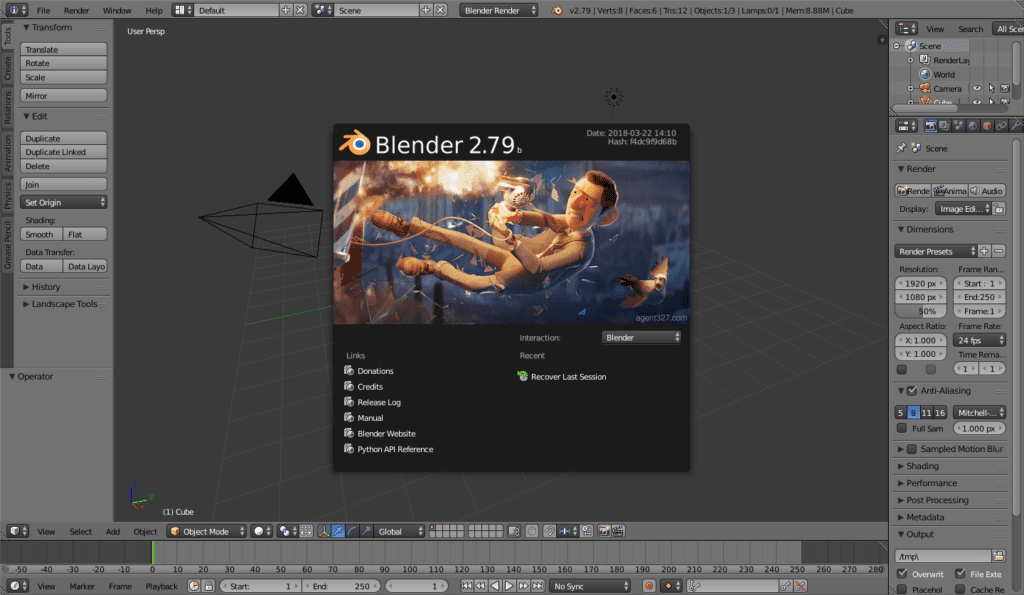
Blender is a leading open source tool in 3D design.
3. Networking and Multiplayer Frameworks
As the Metaverse thrives on social interaction, robust networking solutions are essential for creating multiplayer experiences. Technologies such as Photon, Mirror, and PlayFab enable developers to implement real-time multiplayer functionality, allowing users to interact seamlessly within the virtual world. For instance, Photon boasts over 1.5 million monthly active users and supports more than 100,000 concurrent players, making it a popular choice for developers looking to create engaging multiplayer experiences (Photon, 2023).
4. Blockchain and NFTs
Blockchain technology is revolutionizing the way digital assets are created, owned, and traded within the Metaverse. Non-fungible tokens (NFTs) have emerged as a means of representing ownership of unique digital items, such as virtual real estate, in-game assets, and collectibles. According to NonFungible.com, the NFT market generated over $10 billion in sales in Q3 2021 alone, indicating a growing interest in digital ownership (NonFungible.com, 2021).
Game developers are increasingly integrating blockchain into their projects to create decentralized economies. For example, Axie Infinity, a blockchain-based game, allows players to earn cryptocurrency by breeding, battling, and trading virtual creatures. The game has seen exponential growth, with over 2.5 million daily active users and a market capitalization exceeding $3 billion as of October 2021 (Axie Infinity, 2021).
Real-World Examples of Metaverse Game Builders
1. Roblox
Roblox is a prime example of a platform that empowers users to create and share their own games within a vast virtual universe. With over 40 million daily active users, Roblox provides a user-friendly game development environment that allows creators to build 3D experiences using the Lua programming language. The platform has generated over $923 million in revenue in 2020, showcasing the potential for user-generated content in the Metaverse (Roblox Corporation, 2021).
2. Decentraland
Decentraland is a blockchain-based virtual world where users can buy, sell, and build on virtual land parcels. The platform utilizes Ethereum smart contracts to ensure ownership and facilitate transactions. In 2021, Decentraland’s virtual land sales reached $100 million, highlighting the growing interest in virtual real estate (Decentraland, 2021). Developers can create interactive experiences using the Decentraland SDK, enabling them to design games, art installations, and social spaces.
3. Fortnite
Fortnite has transcended traditional gaming by evolving into a social platform where users can attend virtual concerts, participate in events, and interact with friends. The game’s creative mode allows players to design their own maps and game modes, fostering a community of creators. In 2020, Fortnite generated over $1.8 billion in revenue, demonstrating the potential for monetization within the Metaverse (Epic Games, 2021).
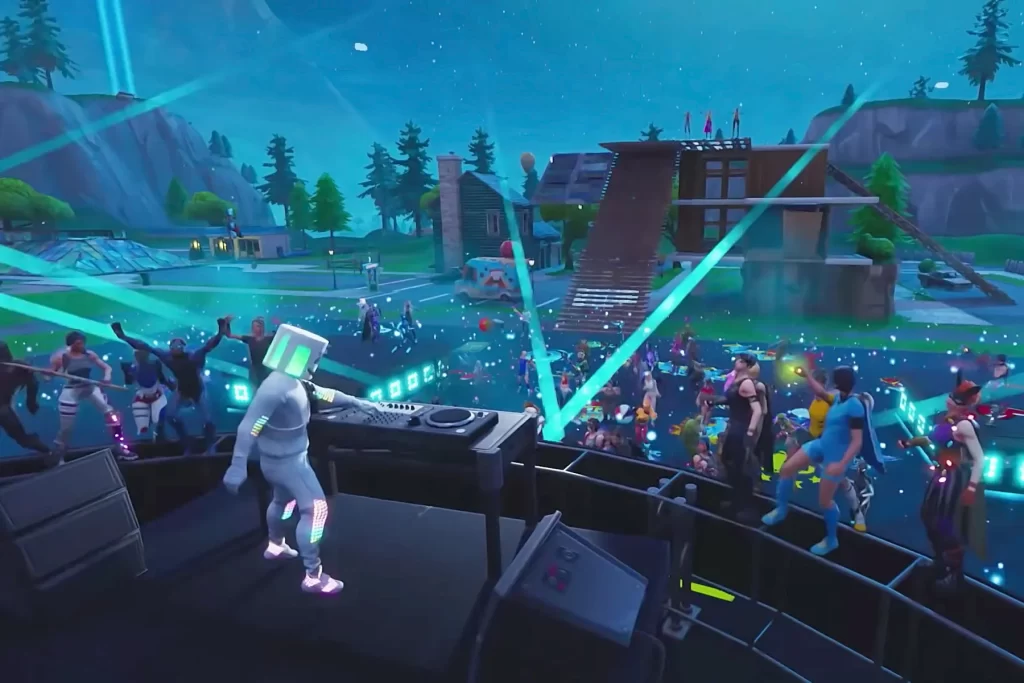
Players enjoy concerts like Marshmello’s at Fortnite events.
Challenges and Considerations in Metaverse Game Development
While the opportunities in Metaverse game development are vast, several challenges must be addressed. One significant concern is ensuring user safety and privacy in virtual environments. As users interact with one another, developers must implement robust moderation tools and privacy settings to protect against harassment and data breaches.
Additionally, the technical complexity of creating immersive experiences can be daunting. Developers must possess a diverse skill set, including knowledge of 3D modeling, programming, and networking. Continuous learning and adaptation to emerging technologies are crucial for success in this rapidly evolving landscape.
Key Takeaways
- The Metaverse is projected to reach $800 billion by 2024, driven by advancements in AR, VR, and blockchain technologies.
- Game engines like Unity and Unreal Engine are essential for creating immersive 3D environments.
- Networking frameworks such as Photon and blockchain technologies are crucial for enabling multiplayer experiences and digital ownership.
- Real-world examples like Roblox, Decentraland, and Fortnite illustrate the potential for user-generated content and social interaction in the Metaverse.
- Challenges such as user safety and technical complexity must be addressed to ensure a positive experience for users.
In summary, Metaverse game builders are leveraging cutting-edge technologies to create immersive 3D worlds that redefine interactive entertainment. As the Metaverse continues to evolve, developers must stay abreast of emerging trends and technologies to harness its full potential. The future of gaming lies in the convergence of creativity, technology, and community, paving the way for a new era of digital experiences.