The Metaverse Game Builder is revolutionizing the way developers and creators design interactive worlds, enabling collaborative tools that enhance user engagement and creativity. This article delves into the technical aspects of the Metaverse Game Builder, exploring its features, real-world applications, and the implications for the future of game development. By examining the underlying technologies and methodologies, we can better understand how this platform is shaping the landscape of interactive entertainment.
Understanding the Metaverse Game Builder
The Metaverse Game Builder is a comprehensive platform that allows users to create, share, and monetize their own games and experiences within a virtual environment. It leverages advanced technologies such as blockchain, artificial intelligence (AI), and cloud computing to facilitate seamless collaboration among developers, artists, and players. The platform is designed to be user-friendly, enabling individuals with varying levels of technical expertise to participate in game development.
Key Features of the Metaverse Game Builder
One of the standout features of the Metaverse Game Builder is its intuitive drag-and-drop interface, which simplifies the game creation process. Users can easily manipulate 3D assets, create interactive elements, and script game logic without extensive programming knowledge. This democratization of game development is crucial in fostering a diverse range of creative expressions.
Additionally, the platform supports real-time collaboration, allowing multiple users to work on a project simultaneously. This feature is particularly beneficial for teams spread across different geographical locations, as it eliminates the barriers of distance and time zones. According to a report by Statista (2023), 70% of game developers believe that collaborative tools significantly enhance productivity and creativity in game design.
Integration of Blockchain Technology
Blockchain technology plays a pivotal role in the Metaverse Game Builder, providing a decentralized framework for asset ownership and transactions. Each in-game asset, whether it be a character, item, or environment, can be tokenized as a non-fungible token (NFT). This ensures that creators retain ownership of their work and can monetize it through sales or royalties.
For instance, the popular game Axie Infinity has demonstrated the potential of blockchain in gaming, generating over $1 billion in revenue through NFT sales (DappRadar, 2023). The Metaverse Game Builder aims to replicate this success by offering creators the tools to develop their own NFT-based games, thus tapping into the lucrative market of digital collectibles.
Real-World Applications and Case Studies
Case Study: Decentraland
Decentraland is a prime example of a virtual world built on blockchain technology, where users can create, explore, and trade virtual assets. The platform allows users to purchase land, develop it, and monetize their creations. In 2022, Decentraland reported a staggering $100 million in sales from virtual real estate transactions (Decentraland, 2022). This case illustrates the potential for economic growth within the Metaverse, driven by user-generated content.
Case Study: Roblox
Roblox is another notable example of a platform that empowers users to create their own games. With over 40 million daily active users and a valuation exceeding $40 billion (Roblox Corporation, 2023), it has become a significant player in the gaming industry. The success of Roblox highlights the demand for user-generated content and the importance of providing accessible tools for game development.

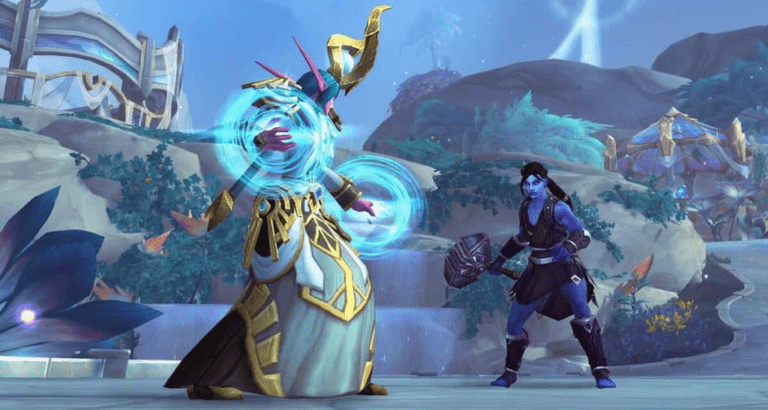
Roblox enables game creation by its users.
Technical Architecture of the Metaverse Game Builder
The technical architecture of the Metaverse Game Builder is designed to support scalability, performance, and security. At its core, the platform utilizes microservices architecture, which allows for modular development and deployment of various components. This approach enhances the platform’s ability to handle a large number of concurrent users and transactions.
Furthermore, the use of cloud computing enables the Metaverse Game Builder to provide high-performance computing resources on demand. This is particularly important for rendering complex 3D environments and supporting real-time interactions among users. According to a study by Gartner (2023), cloud gaming is expected to grow at a compound annual growth rate (CAGR) of 20% over the next five years, underscoring the importance of cloud infrastructure in the gaming industry.
Artificial Intelligence in Game Development
Artificial intelligence is increasingly being integrated into game development processes, and the Metaverse Game Builder is no exception. AI algorithms can be employed to enhance user experiences by personalizing content, optimizing gameplay mechanics, and automating asset creation. For example, procedural generation techniques powered by AI can create vast, dynamic worlds that adapt to player behavior.
A report by Newzoo (2023) indicates that 60% of game developers are exploring AI-driven solutions to improve game design and player engagement. The Metaverse Game Builder’s incorporation of AI tools positions it as a forward-thinking platform that aligns with industry trends.
Challenges and Considerations
Despite its promising features, the Metaverse Game Builder faces several challenges. One significant concern is the environmental impact of blockchain technology, particularly regarding energy consumption. As the demand for NFTs and decentralized applications grows, so does the need for sustainable solutions. Developers are increasingly exploring eco-friendly blockchain alternatives, such as proof-of-stake mechanisms, to mitigate these concerns.
Additionally, the platform must address issues related to user safety and content moderation. As more creators join the Metaverse, ensuring a safe and inclusive environment becomes paramount. Implementing robust moderation tools and community guidelines will be essential in fostering a positive user experience.
Future Implications for Game Development
The Metaverse Game Builder represents a paradigm shift in game development, emphasizing collaboration, creativity, and user empowerment. As the platform continues to evolve, it is likely to influence the broader gaming landscape by encouraging more developers to embrace user-generated content and decentralized models.
Moreover, the integration of emerging technologies such as virtual reality (VR) and augmented reality (AR) will further enhance the immersive experiences offered by the Metaverse. According to a report by IDC (2023), the global AR and VR market is projected to reach $300 billion by 2025, indicating a growing interest in immersive gaming experiences.
Key Takeaways
- The Metaverse Game Builder democratizes game development through collaborative tools and an intuitive interface.
- Blockchain technology enables asset ownership and monetization, paving the way for a new economy within the Metaverse.
- Real-world examples like Decentraland and Roblox illustrate the potential for user-generated content to drive economic growth.
- Technical architecture, including cloud computing and AI, enhances scalability and user experience.
- Challenges such as environmental impact and user safety must be addressed to ensure sustainable growth.
In summary, the Metaverse Game Builder is at the forefront of transforming the gaming industry by providing innovative tools for creators and fostering collaborative environments. As the platform continues to develop, it will likely play a crucial role in shaping the future of interactive entertainment, making it an exciting time for game developers and players alike.