Nowadays, visuals in games are more than just eye candy: they are the soul of player immersion. As players demand increasingly cinematic experiences, developers must constantly refine the tools and methods they use to bring those visions to life. In this article, we want to take a closer look at some advanced rendering techniques for games that are reshaping the industry – and thus deepening the emotional and visual resonance of digital experiences.
From real-time global illumination to virtual texturing and shader-based trickery, the assets detailed here aim to strike the perfect balance between artistic vision and technical precision. Whether you’re a developer, designer, or enthusiast, let’s demystify complex methods together while reinforcing just how powerful a well-executed rendering pipeline can be!
The foundation of advanced rendering techniques for games
Rendering is the backbone of how games translate code and data into visuals. Basic rendering pipelines focus on geometry, lighting, and textures, but to truly stand out, developers must move beyond these foundational steps. Advanced rendering techniques for games allow studios to simulate light, surface interaction, and environmental effects in ways that mimic real life, or enhance it with stylized flair.
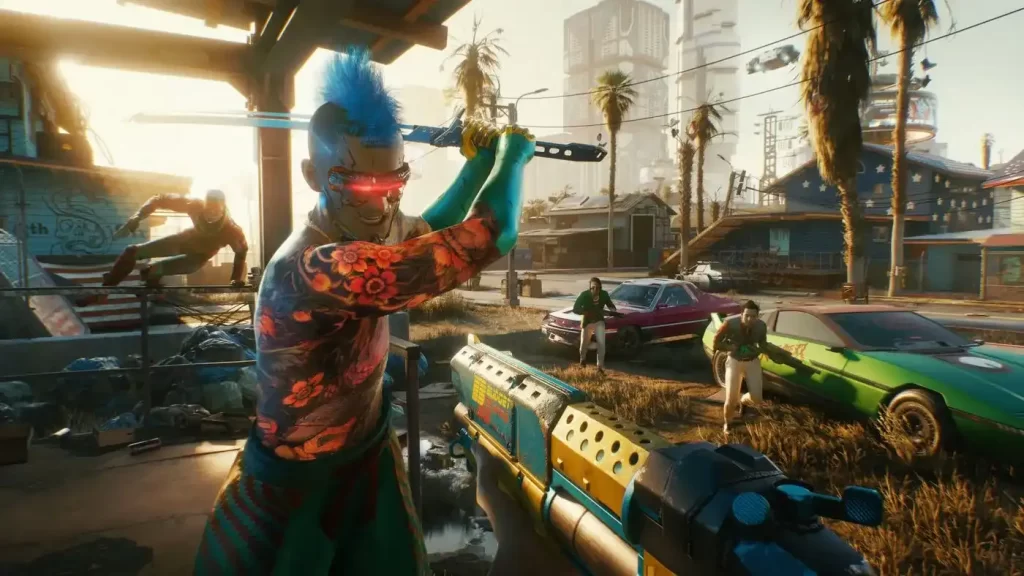
One critical foundation is the shift from forward rendering to deferred rendering. In forward rendering, each object is drawn with all lights applied during its render pass, which limits the number of dynamic lights. Deferred rendering separates geometry and lighting, enabling far more complex lighting scenarios without tanking performance. This innovation has been a game-changer, especially for titles with nighttime scenes, dense environments, or large numbers of interacting lights.
Equally significant is the growing integration of physically based rendering, or PBR. PBR aligns shading with real-world physics – in other words, making materials behave under light more realistically. Combined with accurate surface normals and microfacet theory, this technique forms the bedrock of photorealism in modern games.
Read as well: What was the first game to have ray-tracing?
The role of real-time global illumination
Real-time global illumination has transformed how developers simulate light behavior in a digital space. Unlike traditional baked lighting, which lacks responsiveness to player movement or dynamic environments, global illumination reacts to real-time changes. It captures indirect light bouncing off surfaces and spreading throughout a scene, producing depth, softness, and cohesion.
Techniques such as screen space global illumination, voxel cone tracing, and ray-traced GI each offer different balances of performance and fidelity. The holy grail remains to achieve accurate global illumination without overwhelming system resources. For many studios, hybrid solutions blend traditional and modern methods to optimize for both console and PC platforms.
How advanced rendering techniques for games elevate character realism
One of the most visible applications of advanced rendering is in character rendering. Characters are the emotional anchor of any game, and their believability rests on skin shaders, hair simulation, and subsurface scattering. With subsurface scattering, light penetrates skin layers and scatters before exiting, giving the skin its soft, translucent look. It is a critical tool in removing the “wax figure” effect seen in less sophisticated renderings.
Hair and fur rendering have also seen breakthroughs, thanks to GPU-accelerated strand simulation and specialized transparency sorting algorithms. Coupled with screen-space ambient occlusion and shadow-casting eyelashes or eyebrows, these refinements bring digital actors to life. When these techniques work together, the line between character and player begins to blur, a fundamental goal for immersive storytelling.
Virtual texturing and large-scale world detail
Rendering a massive open world without sacrificing performance is one of the biggest challenges in game design. Enter virtual texturing, a technique that allows developers to stream texture data based on the player’s view rather than preloading entire assets into memory. Also referred to as sparse virtual textures or mega-texturing, this method enables highly detailed surfaces at scale, from forest floors to crumbling ancient ruins.
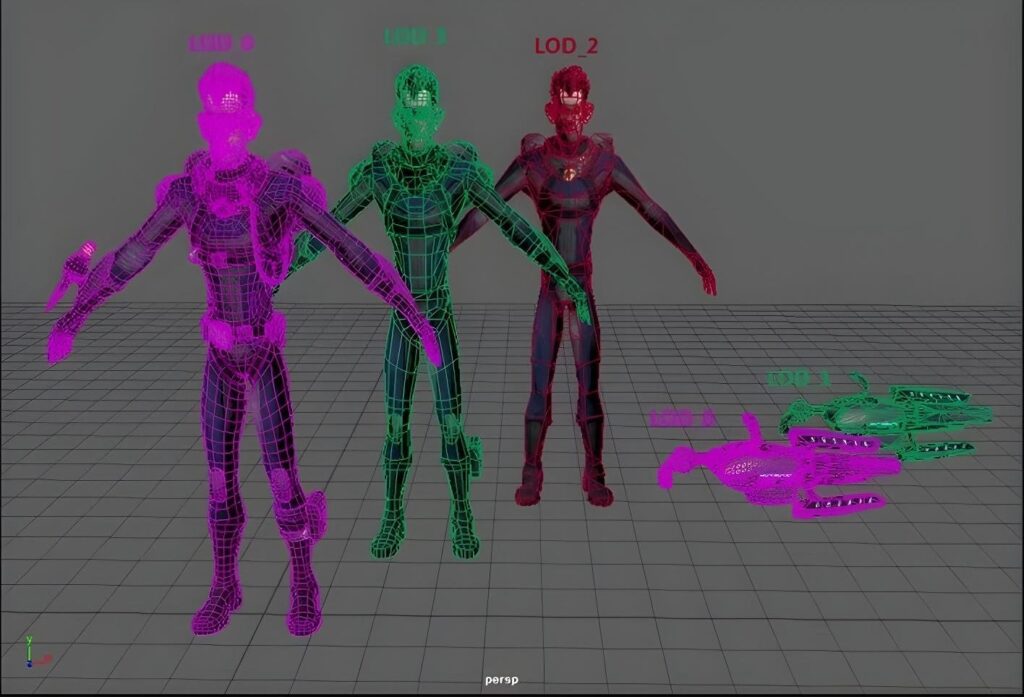
Combined with level-of-detail optimization and intelligent culling, virtual texturing gives developers the freedom to build expansive worlds without worrying about memory bottlenecks. This is particularly beneficial in open-world games, where players might explore vast mountain ranges, dense cities, or complex interiors without experiencing texture pop-in or sudden loading breaks.
Advanced rendering techniques for games like virtual texturing not only improve visual fidelity but also expand creative possibilities. Artists can layer dozens of unique material types within a scene, knowing that only the relevant pieces will be rendered. This harmony of artistic freedom and technical control defines the next generation of world-building.
The growing influence of shader-based rendering
Shaders have always played a pivotal role in-game visuals, but today’s programmable shaders are at the heart of visual experimentation. Modern GPUs allow developers to write highly customized vertex, pixel, geometry, and compute shaders that adapt on the fly to player movement, light conditions, or even narrative cues.
From stylized cel-shading that mimics hand-drawn animation to procedural materials that change based on gameplay input, shaders give games their signature aesthetic. They also allow for real-time weather changes, magic effects, or distortion fields, adding a layer of interactivity that static textures can’t achieve.
Advanced rendering techniques for games and hardware acceleration
Modern rendering wouldn’t be possible without specialized hardware acceleration. GPUs are no longer just number crunchers; they’re intelligent partners in game development. NVIDIA’s RTX platform and AMD’s FidelityFX suite provide premium tools like DLSS (Deep Learning Super Sampling) and FSR (FidelityFX Super Resolution), allowing developers to enhance visuals while keeping frame rates high.

Hardware-based ray tracing is one of the most significant innovations in this space. It simulates the physical behavior of light, tracing paths as they bounce off surfaces, refract through glass, or diffuse through fog. Although traditionally demanding, clever integrations using hybrid ray tracing and denoising techniques make this feasible even on mid-range systems.
These tools make rendering more accessible, empowering smaller studios to achieve AAA-level visuals. When paired with good design sensibility and optimized pipelines, the results can rival those of the industry’s biggest names.
Where artistry meets engineering
Rendering is not just about pushing pixels: it’s about storytelling. When developers implement rendering techniques they blur the line between the real and the imagined. Shadows no longer simply fall,they creep, dance, and disappear; water doesn’t just reflect – it ripples with physics-based interaction and reflects complex skies; fire, fog, and foliage come alive through calculated simulation and layered systems.
These innovations are not achieved in isolation – as you can see, they are the result of intense collaboration between artists, programmers, and technical directors. Studios that succeed here are those who understand that visual fidelity must always serve the player experience. It’s not about what can be rendered, it’s about what should be rendered to deepen emotion, clarity, and impact.
The creative potential unlocked by advanced rendering techniques for games
As rendering techniques evolve, so too does the potential for player-driven storytelling. Advanced rendering allows environments to respond to choices, moods to shift with lighting, and entire worlds to transform in real-time based on narrative branching. These aren’t just visual gimmicks: they are tools of immersion and agency.

At Main Leaf, we understand the intricate dance between code and creativity. Whether assisting partners with complex shader systems or managing end-to-end development pipelines, our goal is always to elevate the vision of each project. If you’re seeking to transform your game’s visual narrative, our team is ready to help make it happen.